This Week 03
What Akio Morita, the founder of Sony taught me. Seamlessly blending software and hardware. Delete unloved features. A new jacket designed by Apple's most famous designer.

Books I’m reading
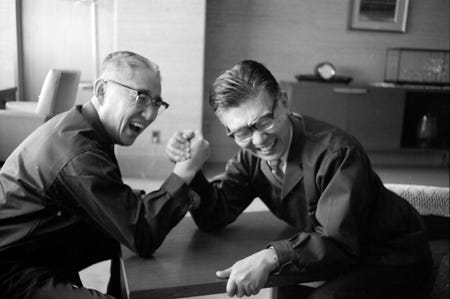
I’m still reading Made in Japan, an autobiography by the founder of Sony. I’m 1/3rd of the way through. It’s not as packed with practical insights as James Dyson’s autobiography, Against the Odds, which I also read this year and recorded a podcast episode on, but it’s engrossed me nonetheless.
I’ve so far learned that Sony is the brainchild of both Akio Morita and Ibuka Masaru, a dynamic duo if there ever was one. They were both living in Japan during WW2. Once America nuked Hiroshima and Nagasaki, and the emperor of Japan announced the country’s surrender, both Akio and Ibuka, along with the rest of the country, scrambled to figure out what to do with themselves, as you can imagine any post-war-surrender confusion might play out.
Akio and Ibuka got along and respected each other’s technical talents. Akio was an academically gifted physicist developing infrared-guided bombs for the Japanese military. Ibuka was older, also doing research for the military. They bonded over their interest in electronics and technology and they knew they wanted to work together. So after the war in 1946, they co-founded Tokyo Tsushin Kogyo K.K. (translation: Tokyo Telecommunications Engineering Corporation). Try saying that 10 times fast. Even Japanese people had trouble with the name. Eventually, Akio and Ibuka renamed the company to Sony.
Their first successful contract was building audio equipment for NHK (the Japanese equivalent of England’s radio channel, BBC). The interesting thing is that NHK was taken over by the American government, the “Occupation forces” as Akio amicably calls them. A brigadier general, the officer in charge of running NHK then, came by to Akio and Ibuka’s work shack, a run down and dilapidated building affected by the war and, needless to say, he was not impressed, but a friend of Ibuka’s who was in charge of engineering reconstruction of war damage of NHK swore by the duo’s talents. The general was persuaded… perhaps reluctantly.
When the equipment was delivered, the general was taken aback.
Everyone marveled at its quality, especially the skeptical officer, who was still puzzled by the fact that a small, new company in a makeshift factory could product such a high-technology product.
This is my first takeaway from the book: Don’t skimp on quality. How you start is how you finish, and the more I read the book the more I see how adamant Akio and Ibuka were about producing high quality products and avoiding like the plague any contracts that would get them to produce something they weren’t happy with. These guys were stubborn and dedicated to their craft and it served them well in the long run, obviously.
Next, they decide to develop a product completely new to Japanese consumers: tape recorders. Incredible technology at the time, but only really available in America. Using their own money and money from Akio’s father, a well-off miso, sake, and soy sauce producer, they began hiring and engineering.
Just a note: Ibuka was losing credibility with his colleagues and the company’s accountant because he had so many ideas for products to create but failed to complete any of them. (He’s just like me. And probably you.) So at this point, Ibuka was like “eff it” and decided that the tape recorder HAD to be the thing they produced.
They toiled over the thing, then once they created a version they were happy with, they tried selling.
We were in for a rude awakening. The tape recorder was so new to Japan that almost no one knew what a tape recorder was, and most of the people who did know could not see why they should buy one. It was not something people felt they needed. We could not sell it.
This next part of the book echoes my second learning from Akio, which is that in order to sell something, you must be SPECIFIC. This is something Dyson wrote about in his autobiography too. You can’t sell a “do-it-all product” because people struggle to come up with their own use cases. You must sell a specific solution to a customer’s specific problem. Here’s what Akio wrote:
A fortunate chance incident helped me to see the light. I was still trying to figure out what we were doing wrong in trying, but failing, to sell our tape recorders, when I happened to stroll by an antique shop not far from my home in Tokyo…
As I stood there looking at these old art objects and marveling at the high prices marked on them, I noticed a customer buying an old vase. Without hesitation, he took out his wallet and handed over a large number of bills to the antiques dealer. The price was higher than we were asking for our tape recorder! Why, I wondered, would someone pay so much money for an old object that had no practical value, while a new and important devices such as our tape recorder could attract no customers?
[…]
At that moment, I knew that to sell our recorder we would have to identify the people and institutions that would be likely to recognize value in our product.
The company went to the courts of Japan because someone noticed heard that there was a shortage of stenographers after the war.
We were able to demonstrate our machine for the Japan Supreme Court, and we sold twenty machines almost instantly!
Then they went to schools and demonstrated that the recorder would be great for teaching languages too. The idea spread like wildfire and Akio and Ibuka felt that every school in Japan would need and want a tape recorder.
This is getting long so I’m going to stop here.
Look out for a podcast episode on the Sony duo in the near future.
Things I’m buying
Nothing!
Gotta celebrate the stretches of time when you didn’t feel the need to buy anything new to fill a void in your life.
Technology that amazed me
Watch this incredibly odd demo of an audio-to-video lip syncing AI model. The implications of it are creepy. The possibilities it creates are cool. It’s a lot of things. Make up your own mind about it by watching the videos in the thread I linked above.
Here’s the research paper on it if you’re looking to learn more.
Audio I’m listening to
Designs I enjoyed
I love software design that takes into account the form factor it’s being implemented for. A seamless blending of software and hardware. Apple is starting to do this more with the new Dynamic Island and the little bezel bump when you tap the volume buttons on iOS 18.
I found this guy that designed a prototype to do the same thing for a scrolling indicator. Pretty cool. Click this link to watch the video on X.
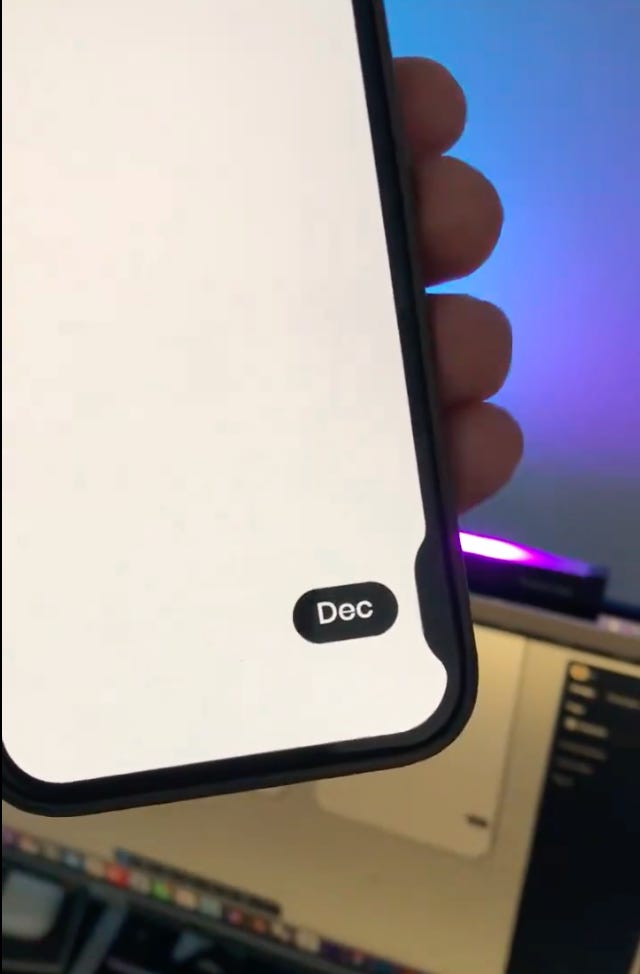
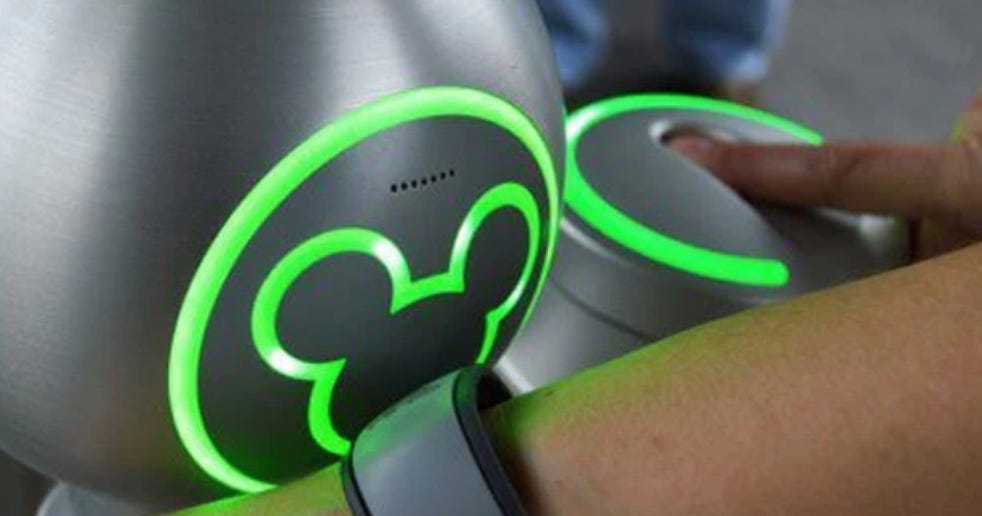
It takes me back to the very first time I noticed a magical blend of soft- and hardware like that: the Magic Band scanners at Disney. I’m not sure if this video does it justice, but man, in person this is so satisfying. Disney could have grabbed a scanner off the shelf here, but this is what separates companies that care about the details from companies that don’t. Or should I say, companies that do things RIGHT, from ones that don’t? They go that extra mile.
Next, a tweet from Brian Lovin.
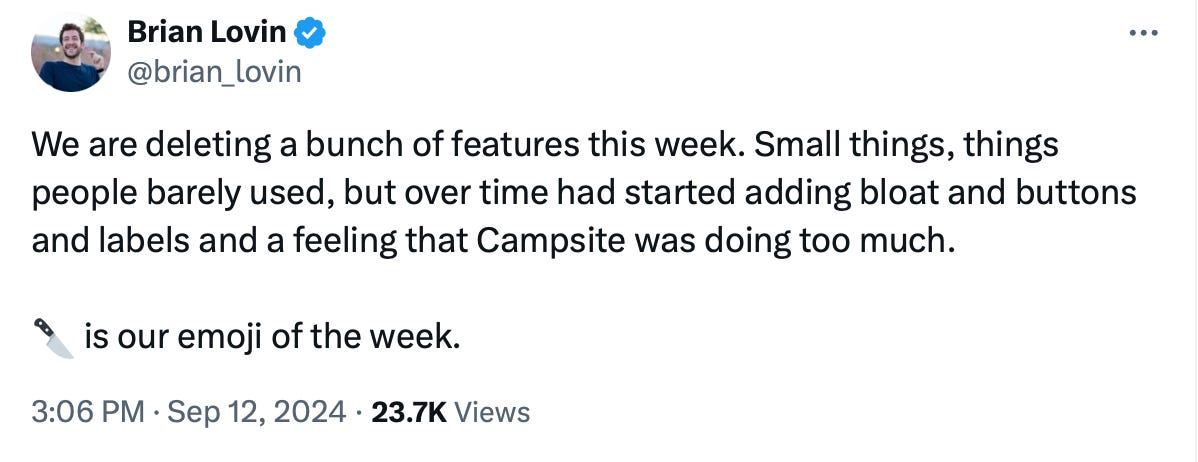
I love this. How often do you think about killing features in your product? Never? Well that’s a problem. Don’t worry, I’ve suffered from working for companies that don’t do it either. This creates bloat. Remember Hick’s Law: the more you crowd an interface, the harder it is for your users to make a decision on it. Consider removing features that aren’t loved.
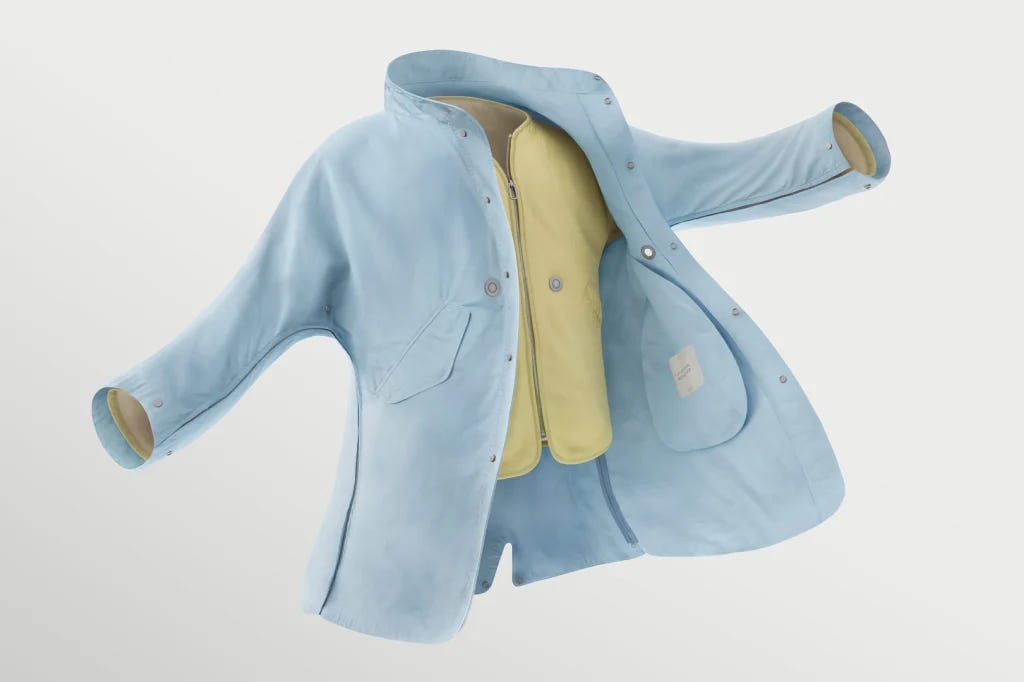
When Jony Ive left Apple, he started his own design agency called LoveFrom. Now they’ve teamed up with Moncler to create a jacket.
It’s giving me Apple vibes. It’s a beauty, and if it’s not absurdly pricey I might grab one when it’s released later this month.
Read Fast Company’s article about it here.
Another appreciation of work by Mike Smith on X who’s killing it lately: